4-Week Live Hand Technique Coaching with Tuomas Rauhala
UNDERSTAND YOUR HANDS
Before you try to change your technique, learn to understand it.
There are thousands of hand technique exercises, rudiments, tutorials and quick fixes available online.
But more information and more exercises are not always the answer.
Exercises can tell you what to play. Videos can show you how something works. But neither can see what is actually happening when you pick up the sticks.
Understand Your Hands is about learning to recognize your own movement, mechanics and technique — so you can make better decisions about what to work on and why.
ENROLL NOWDo You Actually Know What Your Hands Are Doing?
Maybe you’ve been playing for years but still find yourself wondering:
- Why does my playing feel relaxed at one tempo but tense at another?
- Why does one hand feel more natural than the other?
- Where does the movement actually come from — the fingers, wrist, arm, or even the shoulder blade?
- Am I allowing the stick to rebound naturally, or am I fighting against it?
- What happens to my grip when I play faster, louder, or softer?
- How high are my sticks — and what path are they actually taking?
- What should I actually be paying attention to when I practice?
If you recognize yourself in some of these questions, you may not need another collection of exercises.
You may need to get better at seeing, feeling and understanding what is already happening in your own playing.
You Can’t Effectively Change What You Can’t Recognize.
Hand technique is not only about rudiments, exercises, or increasing BPM.
It is about understanding movement — and learning to recognize what is actually happening in your own playing.
The goal is not to force a “perfect” technique in four weeks.
The goal is to help you see your own playing more clearly, so you can make better decisions about what to work on, what to change, and what to leave alone.
Inside this coaching, you will look at
- Grip, fulcrum and rebound
- Where movement comes from
- How fingers, wrists and arms work together
- Stroke mechanics and stick heights
- Tension, relaxation and breathing
- Posture and ergonomics
- Single and double strokes
- Dynamics and control
- Moeller technique and different ways to produce strokes
- Warm-ups, mobility and preparation
- How to recognize what is happening in your own playing
- How to make better decisions about what to practice next
What We’ll Explore
Over four weeks, Tuomas will guide you through the mechanics of your hands with a calm, practical, and personal approach.
Observe movement
- How your hands move when you play
- Where unnecessary tension may appear
- How your grip changes at different tempos and dynamics
Study rebound and control
- Whether you are using rebound or fighting against it
- How stick height affects sound, control, and effort
- What your hands do when the music gets more demanding
Choose what comes next
How to choose a clearer technical focus for future practice.
Exercises, rudiments, and written material are included.
But they are not the point.
They are tools for understanding.
This Is Not About Copying Someone Else’s Hands.
It is about understanding your own.
Technique advice often becomes confusing because it is disconnected from the player in front of it.
One drummer may need more freedom.
Another may need more structure.
One hand may behave differently from the other.
A movement may feel effortless at one tempo and become tense at another.
That’s why there isn’t one technique everyone needs to copy.
This coaching helps you slow things down, recognize patterns, and understand how movement connects to sound, feel and control.
Awareness comes first.
Once you understand what is actually happening, it becomes much easier to decide what — if anything — needs to change.
MEET YOUR COACH
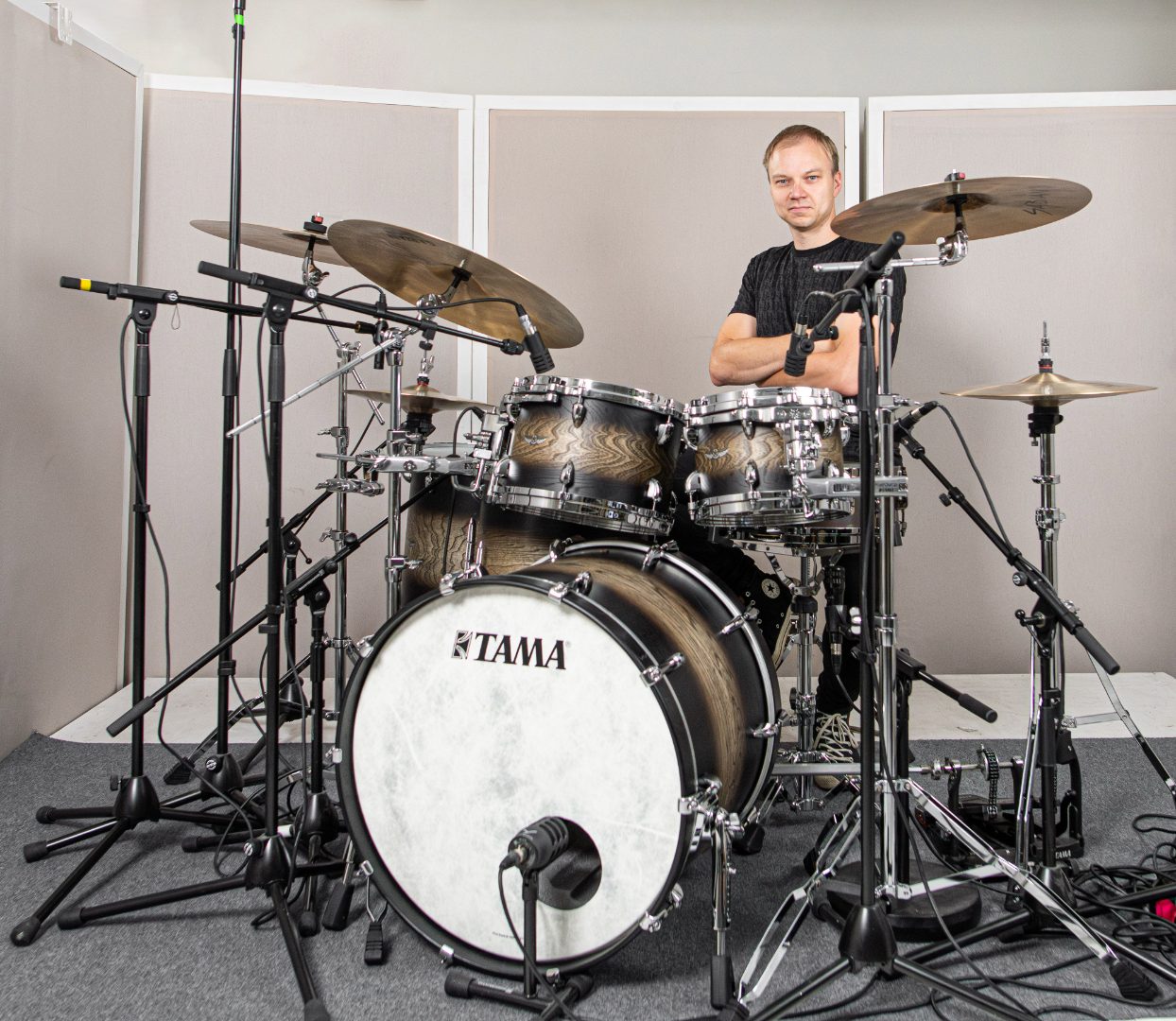
I’m Tuomas Rauhala, a Finnish drummer and educator with nearly 30 years of experience playing drums and percussion.
My musical background started with classical percussion and later expanded into rock, metal, jazz and fusion. I studied at the Helsinki Pop & Jazz Conservatory and hold a Bachelor of Arts degree in Pop/Jazz Music Pedagogy from Metropolia University of Applied Sciences.
Over the years, I’ve worked as both a professional drummer and educator, performing with a wide range of artists and teaching drummers at different levels. I’m also the founder of Drum Routines and co-founder of the Hahto & Rauhala Drum Camp.
My teaching goes beyond simply what to play. I’m especially interested in the physics and mechanics behind drumming — how the body, sticks and instrument interact, how movement produces sound, and where unnecessary tension and effort can get in the way.
The goal isn’t to force everyone into one “correct” technique. It’s to help you understand why things work, become more aware of how your own body moves, and build a more efficient, controlled and sustainable way to play.
When the foundation works, technique becomes easier — and you have more freedom to focus on the music.
What You Get
- 4 × 90-minute live hand technique coaching sessions
- Private coaching area for questions, discussion and feedback
- Weekday support from Tuomas throughout January
- Recordings of every live session
- Practical exercises and written practice material
- 90-day access beginning January 1, 2027
- A deeper understanding of your own movement, mechanics and technique
- A clearer direction for what to work on and practice next
A short, focused coaching experience.
For drummers who want to understand their hands with more attention and less guessing — using live coaching, observation and feedback to develop a clearer sense of what is actually happening in their own playing.
Who It’s For
This coaching is for drummers who:
- Want to understand what their hands are actually doing
- Struggle with tension, stiffness, rebound or control
- Want to understand their movement instead of simply copying technique
- Have watched tutorials or tried exercises but are still unsure what applies to their own playing
- Want feedback and direction, not just more information
- Want to make more informed decisions about what and how to practice
You do not need to be an advanced drummer.
You only need some basic playing experience, curiosity, and a willingness to look closely at how you play.
Who It’s Not For
This coaching is not for drummers looking for a shortcut or a quick fix.
It is not a promise of perfect hands in four weeks.
It is not another collection of exercises to work through.
It is not about forcing one “correct” grip or technique on everyone.
And it is not a passive course where you simply watch videos and move on.
The goal is to observe, understand, experiment and learn to make better decisions about your own playing.
ENROLLMENT OPEN — JANUARY 2027
Understand Your Hands
4-Week Live Hand Technique Coaching with Tuomas Rauhala
€399 — One-Time Payment
Four live, interactive coaching sessions focused on understanding and improving hand technique, movement, control and efficiency.
LIVE COACHING SCHEDULE
Sundays — January 10, 17, 24 & 31, 2027
20:00 Finland (EET)
19:00 Central Europe · 18:00 UK
13:00 New York · 12:00 Chicago · 10:00 Los Angeles
Each session lasts approximately 90 minutes.
All sessions are recorded, so participants can catch up if they cannot attend live.
WHAT'S INCLUDED
- 4 × 90-minute live coaching sessions
- Live Q&A and opportunities for personal feedback
- Recordings of all four sessions
- Private Drum Routines Community coaching area
- Coaching materials and supporting resources
- Community and recording access until March 31, 2027
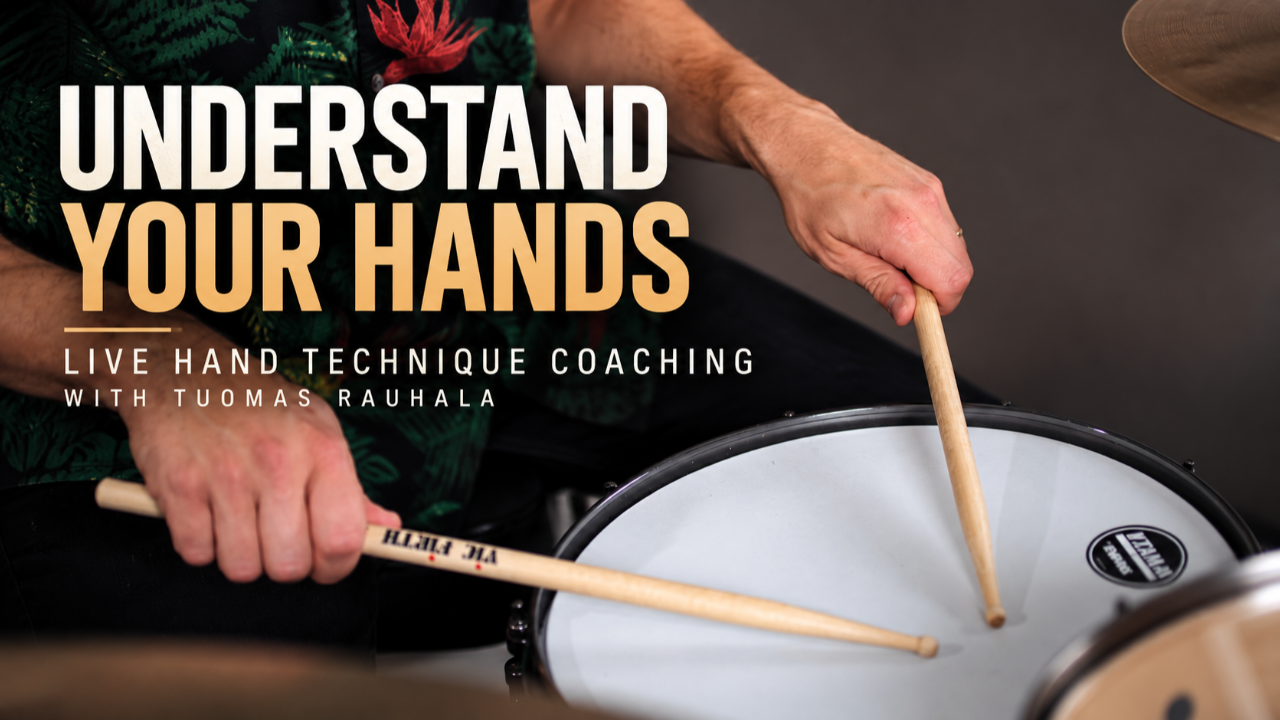
Understand Your Hands / January 2027
A 4-week live hand technique coaching program with Tuomas Rauhala. Develop a deeper understanding of grip, rebound, stroke mechanics, movement and control through live coaching, practical exercises and between-session support.
€399,00 EUR
One-time payment. No subscription. Limited group size.
Start With Understanding.
If your hands feel confusing, tense, inconsistent, or difficult to improve, this coaching gives you a focused place to understand what is actually happening in your playing.
Join the 4-week live coaching to get observation, feedback and direction — and develop a clearer understanding of what to work on and why.